

Personal Grievance Remedies: A Whole New Era?
The Employment Relations Amendment Act 2026 made several changes to remedies for personal grievances: requiring the Employment Relations Authority to reduce or remove remedies where the employee’s conduct has “contributed” to the situation and/or amounts to serious misconduct. How those terms will be interpreted and applied remains to be seen, but they could herald a whole new era in employment law in New Zealand, in which employers are prepared to take a far more robust approach to serious misconduct and other conduct tending to undermine the employment relationship.
In this article, we discuss some key issues, including:
- When employee remedies may be reduced or lost altogether.
- The uncertainty around causation and the lack of definition of "serious misconduct".
- Why employers still need to get process right.

Damages more than doubled after couples landmark leaky building win

REA tribunal finds misconduct for not disclosing weathertightness risks
A recent REA Disciplinary Tribunal decision (CAC 2204 v Beale) serves as a strong reminder of the scope of disclosure obligations in real estate transactions. It’s not just known defects that matter, agents must also be alert to, and proactively disclose, potential risks where construction types or materials are widely recognised as high-risk.
This case highlights how failing to do so can cross the line from a simple oversight into misconduct. It’s an important development for anyone involved in property sales, reinforcing the need for transparency and careful risk identification.

Court of Appeal clarifies approach to reasonable remedial scope, revisits Calderbank offers
Court of Appeal rejects ‘Bianco Apartments’ Body Corporate and owners’ $40m repair claim against Auckland Council and Argon over $5.3m repair option – and suggests the plaintiffs ought to have accepted a ~$20m settlement offer. The Court accepted the defendants’ expert’s scope offered an effective and durable, but more cost-effective and reasonable repair, than the plaintiffs’ “full replacement” scope.
For committees facing costly building defect repairs, this decision offers crucial guidance on how courts are assessing “reasonable remedial scope.” If your Body Corporate is dealing with defects or considering litigation, this case is essential reading. The Courts suggested “steely” approach to Calderbank offers is also notable, especially in view of the new High Court Rules civil procedure reforms aimed at improved access to justice and reduced delays.

Australian High Court boosts business owners eyeing nuisance claims against NSW govt
The High Court of Australia recently overturned a key decision involving the Sydney Light Rail project, finding that public authorities may be liable when construction delays become unreasonable. This is a significant development for business owners impacted by extended public works disruptions.

Wellington flights stoush not 'them versus us', says group who sought judicial review - Stuff.co.nz
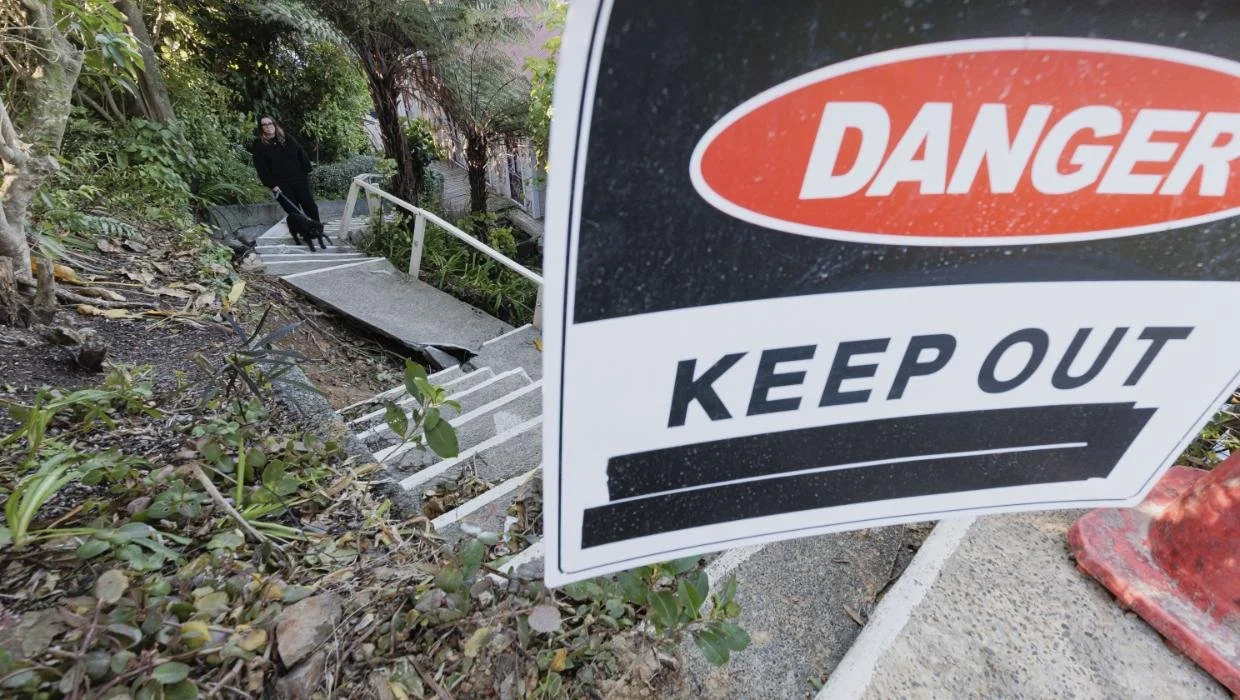
If a council water pipe bursts and triggers a landslide on your land, who is responsible?

Can you claim “deceit & misrepresentation” for a leaky home sale?
This article discusses the High Court’s recent decision in Vanifatova v Wang [2025] NZHC 1532. The decision provides an illustration of the risks of non-disclosure, misrepresentation and deceit in the context of a leaky home sale.

Government to rewrite building liability laws

RNZ National Radio - Govt makes changes to who pays when buildings go wrong (audio)

Apartment Owners Beware
A recent decision of the High Court is a timely reminder to apartment owners that breaching contractual disclosure obligations in sale and purchase agreements can lead to serious legal consequences, including substantial damages.

High Court limits the availability of exemplary damages
The recent High Court decision in Taylor v Roper [2025] NZHC 30 clarifies the limits of exemplary damages in cases of vicarious liability. The court confirmed that such damages are meant to punish conscious wrongdoing e.g. deliberately running a known risk of causing harm to another, which is generally not the case with a defendant who is vicariously liable for the actions of another, third party (except in cases involving an unidentified wrongdoer—which did not apply in Taylor). While the court acknowledged the injustice faced by Ms. Taylor, it ultimately dismissed the claim for exemplary damages. Read more about the case and its implications below. #Litigation #ExemplaryDamages #VicariousLiability

The Building Act and contribution claims

Local business owners successful in legal action against NSW government for impacts of construction project

Limitation clauses in construction contracts

Performance bonds – a glimmer of hope for contractors?

Key decision on limitations for civil claims

Building product liability in New Zealand

Legal Update – General damages in New Zealand
